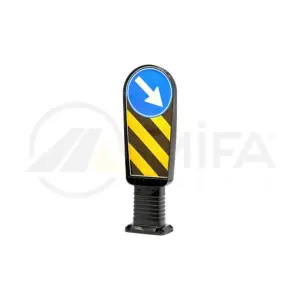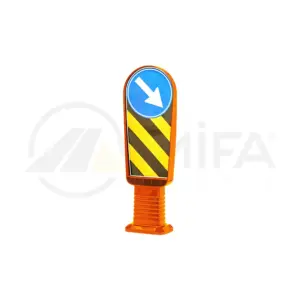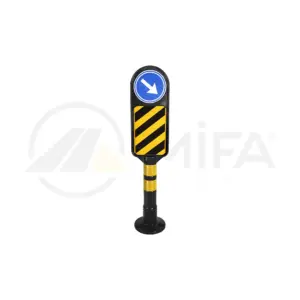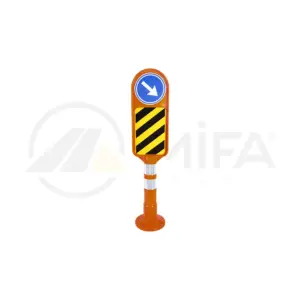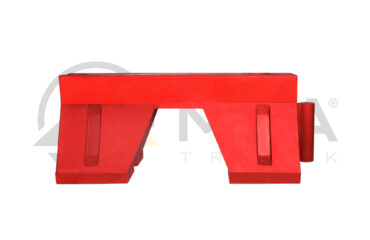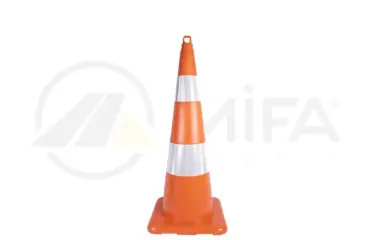

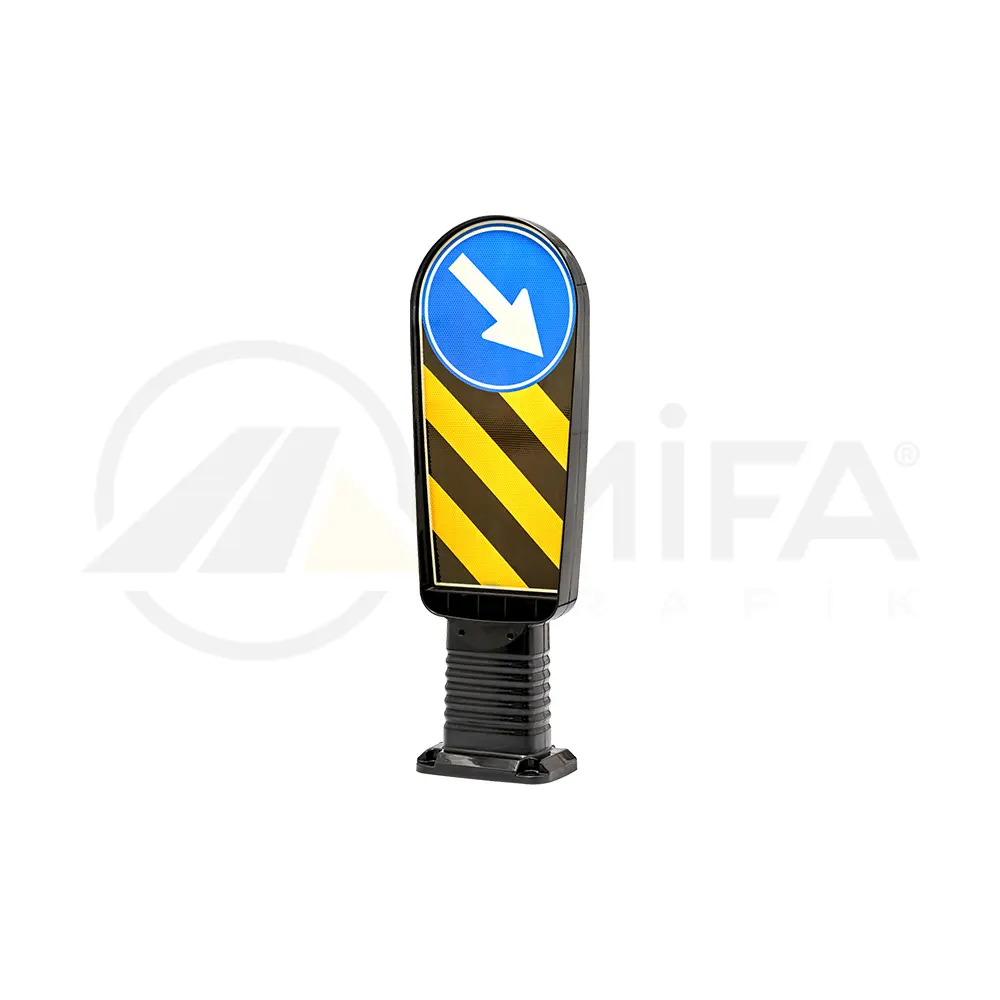
A delineator is a flexible traffic safety device mounted on the road surface to guide drivers and separate lanes. Also known as a lane separator, a delineator provides high visibility at night and in bad weather thanks to its reflective bands, and it bends and recovers its shape when hit by a vehicle.
What Does a Delineator Do?
The main task of a delineator is to show drivers the road boundaries and lane layout clearly. It marks areas closed to traffic, discourages wrong-way entry and creates a safe corridor during road works. At junctions, before curves and on hazardous sections it significantly reduces the risk of accidents.
Where Delineators Are Used
- Lane separation on urban arterials and dedicated bus corridors
- Junction channelization and turn pockets
- Car park entrances, exits and internal site roads
- Temporary traffic management at road works and construction sites
- Pedestrian safety around schools and hospitals
Types of Delineators
By body material, polyurethane and PVC delineators are the most common. Polyurethane models regain their form even after being run over, which makes them the first choice for busy boulevards. By base type there are fixed models installed with anchors and screws, and portable models with rubber bases. Heights typically range from 45 to 75 cm.
Installation and Selection Tips
Delineator spacing is set according to the speed limit of the road: the higher the speed, the wider the spacing, while curves and hazard points require tighter placement. For asphalt installation use impact-resistant anchors and screws, and orient the reflective bands so they face oncoming drivers.
To choose the right model for your project, browse our delineator range or contact us for a fast quotation with quantities and dimensions.