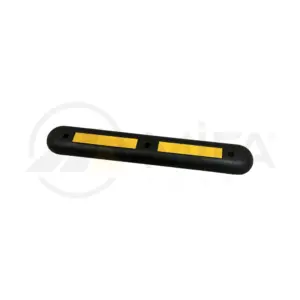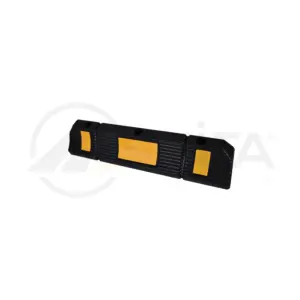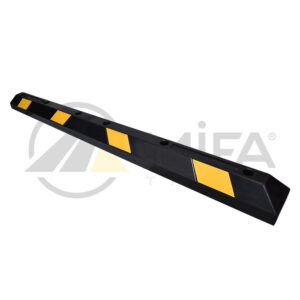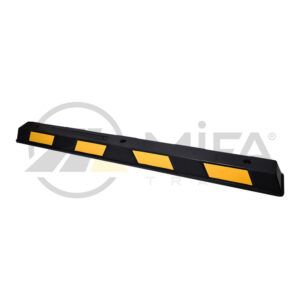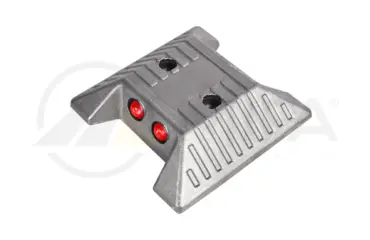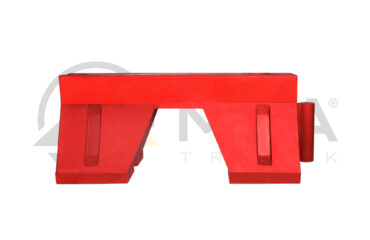

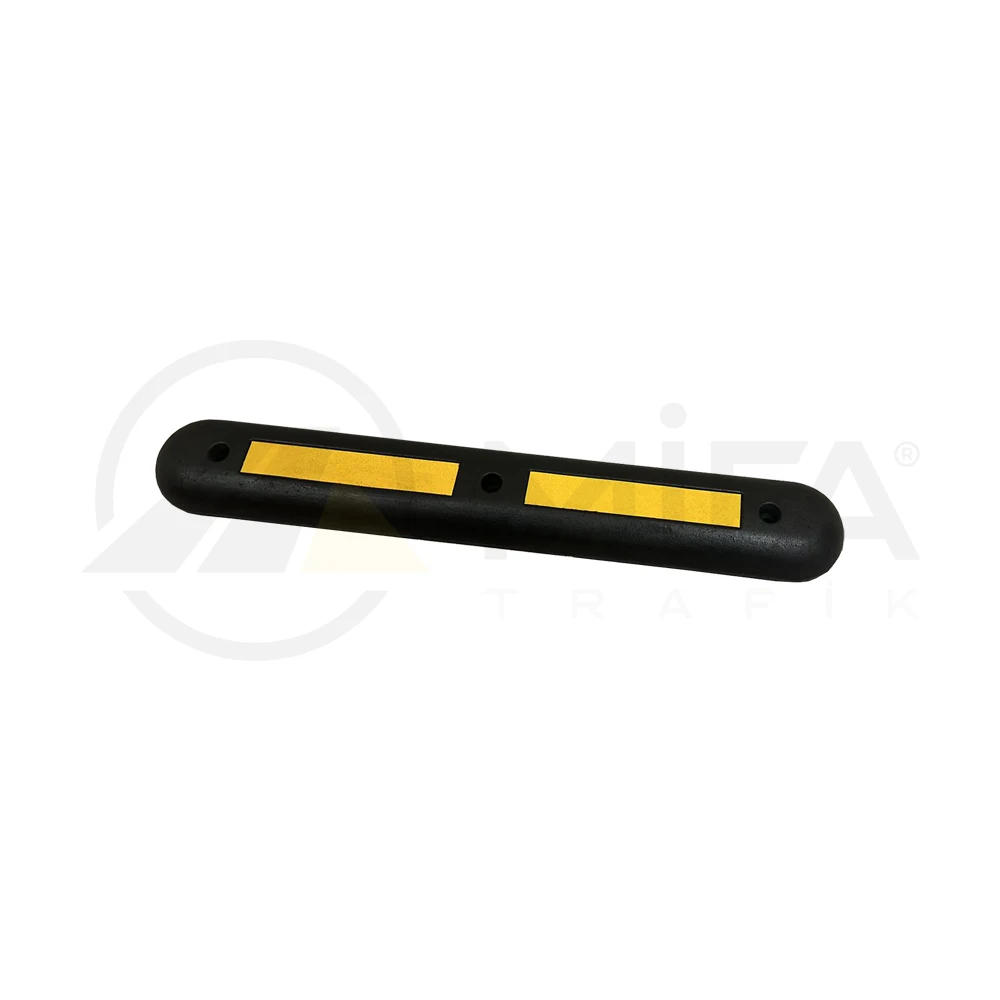
A wheel stop is a floor-mounted safety device that prevents vehicles from hitting walls, columns or other cars during parking manoeuvres. Choosing the right wheel stop protects both the vehicles and the structure of the car park.
Rubber Wheel Stops
Rubber wheel stops absorb the impact and stop the vehicle without damaging the tyre or the bumper. Their flexible structure does not crack, and they resist UV and moisture. Yellow reflective strips provide visibility even in underground car parks. They are the standard choice for shopping malls, residences and indoor car parks.
Steel Wheel Stops
Steel wheel stops offer maximum durability in areas with heavy vehicle traffic. They suit truck and bus parking areas, logistics centres and factory yards. The yellow-black painted surface stays visible for years; steel stops do not deform and last for decades.
Comparison: Which One Should You Choose?
- Passenger car parks: rubber (bumper-friendly, quiet contact)
- Heavy vehicle yards: steel (high strength)
- Outdoor areas: both work; check UV resistance for rubber and paint quality for steel
- Budget: rubber models are usually more economical
How Are They Installed?
Place the stop 70-90 cm inside the end of the parking bay so the wheel stops before the vehicle overhang reaches the wall. Use anchors and screws on asphalt and steel anchors on concrete. Modular stops must be aligned without gaps.
Browse our wheel stop range, tell us how many bays you have and get a tailored quote.